Know Where Your
Sales Come From
You're spending money on ads. Sharing links on social media. Maybe running an email list. But when an order comes in — do you actually know what caused it?
Updated March 2026. For creators selling physical or digital products with fewer than 100 orders per month.

The Actual Problem
You posted about your product on Instagram yesterday. You ran a Google ad last week. You emailed your list on Monday. Today you got three orders.
Which one worked?
Without tracking, every order looks the same in your dashboard. Someone bought something. You don't know if they came from the ad you're paying for, the Instagram post that took five minutes, or a friend who texted them a link. You're flying blind, spending money based on vibes.
UTM tracking solves this by tagging your links. When you share a product URL on Instagram, you add a small bit of extra information to the link that says "this came from Instagram." When someone clicks that link and buys, the sale gets credited to that channel.
It's not perfect — nothing in marketing attribution is. But it's the difference between guessing and knowing.
UTM Parameters Explained
UTM stands for "Urchin Tracking Module" — named after a web analytics company Google bought in 2005. The name is terrible. The concept is simple: you add extra information to a URL so your analytics tool knows where the click came from.
A normal product link:
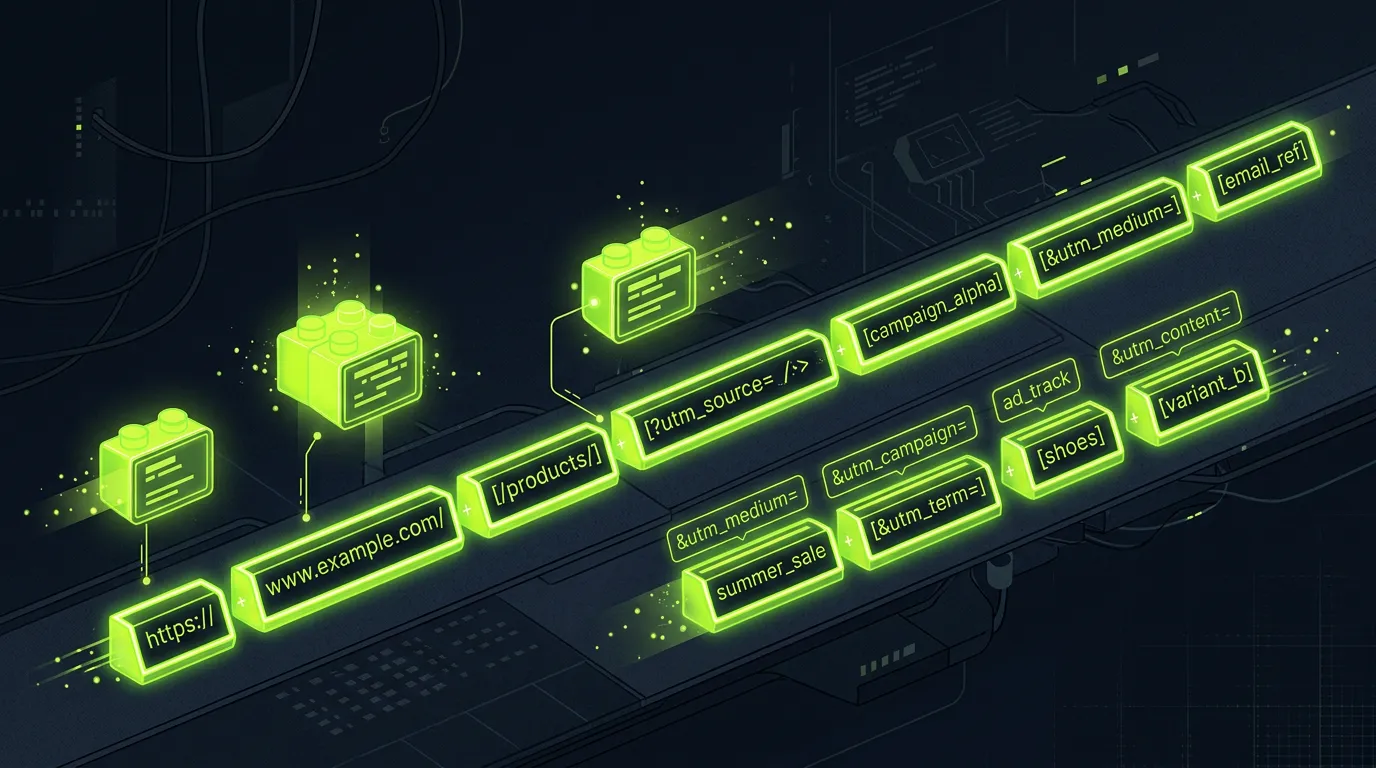
The same link with UTM parameters:
The product page loads identically. The buyer doesn't notice or care about the extra text in the URL. But your analytics sees it. That order gets tagged: Instagram, organic social, spring launch campaign.
The Three That Matter
There are five UTM parameters. You only need three. The other two are for media buyers spending six figures on ad campaigns — that's not you yet.
Where did they come from?
The platform or website. google, instagram, newsletter, tiktok
How did they get here?
The channel type. cpc (paid search), organic_social, email, paid_social
Which initiative?
Your name for the effort. spring_sale, new_product_launch, weekly_newsletter
The rule: source is the platform, medium is the channel type, campaign is what you're doing. Always lowercase. Always use underscores, not spaces. Pick a convention and never break it.
Mistakes That Kill Your Data
Inconsistent naming
facebook, Facebook, fb, and FB create four separate entries in your analytics. Your 20 Facebook orders look like 5 orders from four different places. A study by HubSpot found 64% of companies have no naming convention. For a solo creator, this turns your data into noise.
// Wrong — four phantom sources
utm_source=Facebook utm_source=facebook utm_source=fb
// Right — one source, always
utm_source=facebook
UTM tags on internal links
This is the most destructive mistake and it's invisible. If you add UTM parameters to links between pages on your own store — say, a banner linking from your homepage to a product — you overwrite the original traffic source. A visitor who came from your Google ad now looks like they came from "homepage_banner." The ad gets zero credit. Only use UTMs on links you share outside your store.
Wrong medium values
Google Analytics uses the utm_medium value to categorize your traffic into channels. If you use utm_medium=instagram instead of utm_medium=organic_social, your traffic lands in "Unassigned" — the analytics graveyard where data goes to die. The medium is the channel type, not the platform name.
Attribution Is Broken

Here's what the marketing courses don't tell you: tracking who did what is getting harder every year, and for small sellers it was never that accurate to begin with.
The reality: Apple's App Tracking Transparency means most users decline tracking. Safari deletes tracking cookies after 7 days. An estimated 20-40% of e-commerce conversions go completely untracked. The visitor who sees your Instagram ad on Monday and buys next Saturday? That cookie might already be gone.
If you're selling under 100 orders per month, multi-touch attribution models (linear, time-decay, data-driven) are meaningless. They need hundreds or thousands of conversions to produce patterns. With 30 orders, you're reading tea leaves.
Last-click attribution is the only practical model at your scale. It tells you one thing: what was the last link someone clicked before buying? That's imperfect — it overvalues the final touchpoint and ignores everything that came before. But with fewer than 100 orders, you can't measure "everything that came before" with statistical confidence anyway.
Accept the simplification. Use UTMs to track your last-click sources. Supplement with something no pixel can replace.
The Question Worth More Than Pixels
The single most valuable attribution signal for a small creator is embarrassingly simple:
"How did you find us?"
Ask it on the order confirmation page, right after payment. Response rates are high because the buyer is still engaged — they just committed money. No follow-up email needed.
This one question captures what UTM parameters never will:
- + Word-of-mouth referrals ("my friend told me")
- + Podcast mentions
- + In-person events and meetups
- + The 20-40% of traffic where cookies were blocked or expired
On souldust: This is built in. After a buyer completes a purchase, they see a "How did you find us?" dropdown. Their answer gets stored on the order. You can see the breakdown in your dashboard analytics — no setup required.
Building Your First Tracking Links
You don't need to type UTM parameters by hand. That's how you end up with utm_medium=Facebook on Tuesday and utm_medium=fb on Wednesday.
Use a link builder that enforces your conventions. Here are the links you'll use most:
| When you share on | Source | Medium |
|---|---|---|
| Google Ads | cpc | |
| Instagram post | organic_social | |
| Instagram ad | paid_social | |
| Facebook post | organic_social | |
| Email newsletter | newsletter | |
| Twitter/X | organic_social | |
| TikTok | tiktok | organic_social |
| Telegram group | telegram | organic_social |
On souldust: Go to Dashboard → Campaigns. Pick your product, select a platform preset, name your campaign. The link is generated for you — correctly formatted, always lowercase, no mistakes. Copy it and share.
Reading the Data
After a few weeks of sharing tagged links, your analytics starts telling a story. Not a novel — you're at dozens of orders, not thousands. But a clear story.
You might see: 12 orders from Google Ads at a cost of $150. 8 orders from Instagram posts at a cost of $0. 3 from email newsletter. The Google ads cost you $12.50 per order. Instagram cost you nothing but 10 minutes of posting.
That's the answer you were looking for. Maybe the Google ads are still worth it because those customers buy higher-value products. Maybe they're not. But now you're making the decision with numbers, not feelings.
What to look for
- 01 Revenue per source. Not just orders — total revenue. 3 orders from email might be worth more than 10 from social if the email buyers pick higher-priced items.
- 02 Paid vs. organic. If your organic social posts drive as many orders as your paid ads, you might be overspending on ads.
- 03 Direct / unattributed. Orders with no UTM data. These came from people typing your URL directly, bookmarks, or links you shared without tags. Some level of "direct" is normal — if it's most of your traffic, you're not tagging enough links.
- 04 Survey answers vs. UTM data. Compare what the pixels say with what the buyers say. If 5 orders show "direct" in UTM data but the survey says "friend told me," you know word-of-mouth is working.
Start tracking where your sales come from
souldust captures UTM data automatically. Build tracking links in your dashboard, see which channels drive revenue, and let post-purchase surveys fill the gaps.
Start Selling Free