Disclaimer: This guide is for informational purposes only and does not constitute legal, tax, or financial advice. Laws vary by jurisdiction. Consult a qualified attorney or tax professional for advice specific to your situation.
Sell T-Shirts
Without Inventory
The complete guide to drop shipping t-shirts with print-on-demand. Real costs, real margins, real expectations.
Updated March 2026. Based on current pricing from Printful, Printify, Gelato, SPOD, and more.
In this guide
Drop Shipping in 60 Seconds
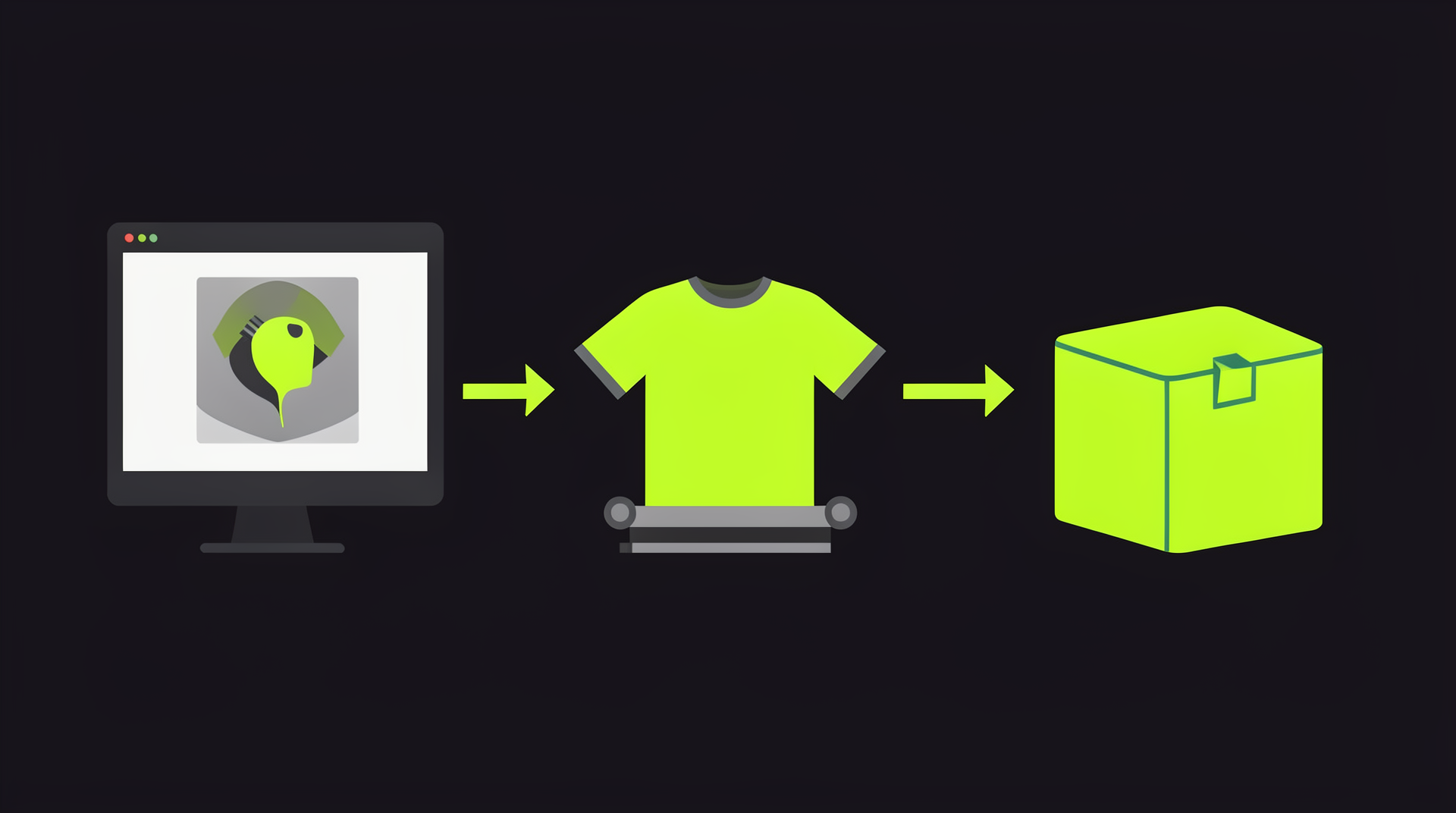
You design. A print-on-demand provider prints and ships. You never touch inventory. The customer gets a shirt, you get the margin, the POD provider handles everything physical.
You design
Create artwork. Upload to your store with mockups. Set your price.
Customer buys
Order goes to your POD provider automatically. They print the design on a real shirt.
They ship
POD provider ships directly to the customer. You keep the difference between retail and base cost.
Zero upfront cost. You don't buy blank shirts. You don't own a printer. You don't pack boxes. You pay the POD provider only when a customer places an order. Your startup cost is your time (and maybe $20 for sample orders).
Choosing a Print-on-Demand Provider
Your POD provider prints, packs, and ships every order. They set the floor for your costs and the ceiling for your quality. US-based providers dominate, but Asian suppliers (Vietnam, China) offer significantly lower base costs. Shipping costs vary dramatically by region — check the columns that matter for your buyers.
| Provider | Base Cost | With Plan | Ship US | Ship EU | Ship Asia | Production | Best For |
|---|---|---|---|---|---|---|---|
| Py Printify | $9.11 | $7.29 | $3–$8 | $4–$9 | $6–$12 | 1–2 days | Lowest cost, largest catalog |
| Pf Printful | $11.50 | $9.49 | $4.75 | $4.79 | $4.75 | 2–7 days | Best quality & branding |
| Ge Gelato | $10.12 | $7.59 | $3–$5 | $3–$5 | $3–$5 | 2–5 days | International (32 countries) |
| SP SPOD | $12.66 | — | $5.99 | $5.99 | — | 48 hours | Fastest shipping (US/EU) |
| Go Gooten | $9.79 | — | $4–$6 | $5–$8 | $7–$12 | 2–5 days | No fees, scaling sellers |
| CC CustomCat | $12.00 | $7.00 | $4.99 | $10–$15 | $10–$15 | 2–3 days | Cheapest w/ Pro (US only) |
| Mz Merchize | $5.25–$8.50 | — | $4–$8 | $5–$10 | $3–$6 | 4–7 days | Cheapest base (Vietnam) |
| CJ CJ Dropshipping | $4–$8 | — | $5–$8 | $5–$10 | $2–$5 | 3–7 days | Lowest cost (China/TH) |
Lowest cost, largest catalog
Best quality & branding
International (32 countries)
Fastest shipping (US/EU)
No fees, scaling sellers
Cheapest w/ Pro (US only)
Cheapest base (Vietnam)
Lowest cost (China/TH)
Shipping key insight
Gelato prints locally in 32 countries — a Thai customer's order ships from Asia at domestic rates ($3–5), not international ($12+). Printful has facilities in Japan, Australia, Latvia, and Brazil. CJ Dropshipping has a Thailand warehouse. For Asian markets, local production beats cross-border every time.
Prices as of March 2026. US provider base costs are for Bella+Canvas 3001, front print, medium. Asian providers use own blanks. Shipping is per single t-shirt — additional items cost less. Always verify current pricing.
Understanding T-Shirt Blanks
The blank is the unprinted shirt your design goes on. It's the single biggest factor in how your product feels. Customers can't feel a design — they feel the fabric.
Gildan 5000
Gildan 64000
Best for testing designs and keeping costs low. Your customers will notice the difference vs. premium — acceptable for $20 tees, not for $35.
Bella+Canvas 3001
Next Level 3600
The standard for serious sellers. Customers expect this quality from any brand charging $25+. Best DTG print results. Fewer returns. Worth the extra $2–3.
Comfort Colors 1717
AS Colour 5001
Justified at $35–$45 retail. The garment-dyed Comfort Colors look and feel is trending — that pre-faded vintage aesthetic. High perceived value.
Design Requirements
Your design file quality directly determines print quality. Get these specs right and your shirts will look professional.
Resolution
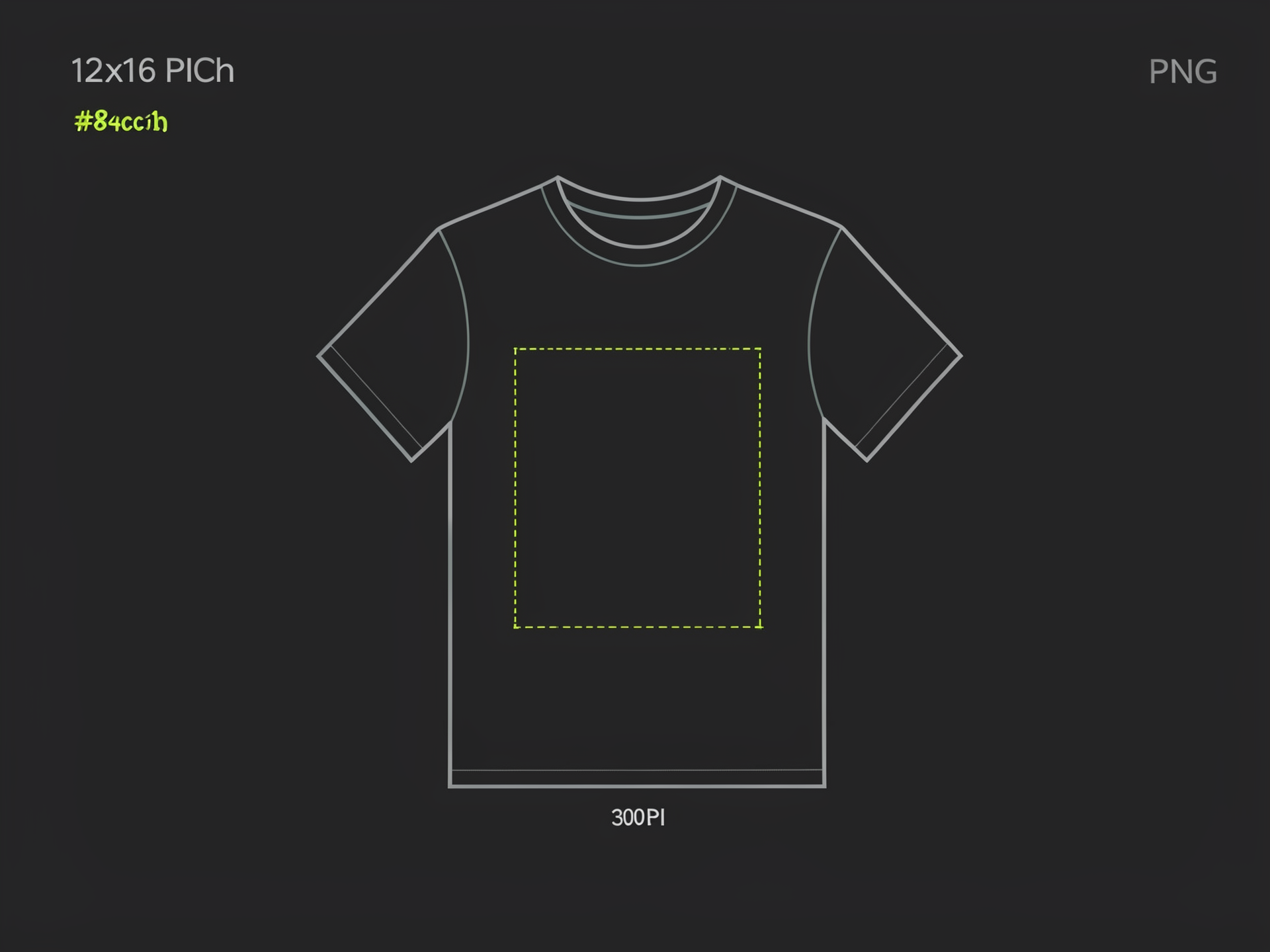
300 DPI minimum for sharp prints. 150 DPI is the floor for acceptable quality. Never go below. Going above 300 just increases file size with no visible benefit.
File format
PNG with transparent background for DTG printing. JPEG works but loses transparency. SVG for vector-based designs. Max file size varies: Printful accepts up to 200MB.
Color profile
Use sRGB IEC61966-2.1. POD printers optimize from RGB internally. Do NOT submit CMYK — it causes color shifts. CMYK is only for traditional screen printing.
Print area
Standard front print area. Some providers support up to 15x18". Keep elements 0.5" from edges. Center chest is safest for beginners.
Print methods
Direct-to-Garment
The POD standard. Inkjet prints directly onto cotton. Best for complex, multicolor designs with gradients. Softer feel than screen print. Works on cotton and cotton blends.
Direct-to-Film
Rising fast in 2026. Prints on film, then heat-transfers to any fabric. Works on cotton, polyester, and blends. More durable than DTG. Slightly thicker feel. CustomCat's DIGISOFT is a proprietary variant.
Sublimation
Dye bonds into polyester fibers via heat. Most vibrant colors, never cracks or fades. Only works on 100% polyester or polymer-coated items. Great for all-over prints.
Common design mistakes
- x Upscaling low-res images — looks fine on screen, prints blurry
- x Using CMYK when the POD expects sRGB — causes color shifts
- x Semi-transparent elements in DTG designs — they don't print well
- x Not removing backgrounds — leaves white rectangles on colored shirts
- x Text not converted to outlines — font substitution ruins the design
- x Same design on every shirt color — dark designs vanish on dark fabric
Print Placements & Limitations
POD providers use fixed print zones — you pick from their menu, not pixel-perfect placement. If you're thinking designer-style prints (above hem, side panel, custom sleeve position), POD has hard limits.
Every additional placement adds $2–6 to your base cost. A front+back+both sleeves shirt can cost 2x a front-only print.
What's possible vs what's not
| Placement | POD Support |
|---|---|
| Front center | available |
| Back center | available |
| Left chest / pocket area | available |
| Sleeves | limited |
| Neck / inside label | limited |
| Above hem | not available |
| Below collar (upper back) | not available |
| Wraparound / side | not available |
| Custom exact position | not available |
Standard. Every provider.
Most providers. Usually +$2–5.
Common. Fixed position — you can't move it.
Printful, SPOD, CustomCat. Small area (~4x4"). Extra cost.
Printful only. Great for branding.
Not available on any POD provider.
Not a standard zone. Requires custom printing.
Only via all-over sublimation (polyester only).
POD uses fixed zones. You can't place freely.
Placements by provider
Printful
Extra placement: $2.49–$5.95 per placement
Most placement options. Sleeve prints max ~4x4". All-over on polyester only.
Printify
Extra placement: Varies by print provider
Placements depend on which print provider you route to. AOP+ for all-over.
Gelato
Extra placement: $2–$4 per placement
Fewer placements but prints locally in 32 countries. No sleeve printing.
SPOD
Extra placement: $2.50–$4 per placement
Good sleeve options. Fast production (48h). No all-over.
Gooten
Extra placement: $3–$5 per placement
Limited standard placements. All-over via sublimation on polyester.
CustomCat
Extra placement: $2–$4 per placement
DIGISOFT (DTF) for durability. Good sleeve support. US only.
How placements affect your margins
Front only
Standard. Best margins.
Front + back + sleeve
Premium feel. Margins tighten at $25 retail.
All-over sublimation
Full wrap. Polyester only. Need $35+ retail.
The designer's dilemma
If your vision involves precise placement — a small logo above the hem, text at a specific angle on the sleeve, a design that wraps from front to side — POD can't do it. Every provider uses fixed rectangular print zones. You can't drag-and-drop to an exact position.
Your options for true creative control:
- 1. Local DTG printer — buy blanks, bring designs, they print anywhere. Full placement freedom. Thailand, Vietnam, and China have excellent low-cost DTG shops.
- 2. Cut-and-sew manufacturer — design the entire garment from scratch. Higher minimums (50–100+) but total control over fabric, fit, and print position.
- 3. Hybrid model — use POD for standard placements to validate designs, then move bestsellers to local production for custom placement runs.
Placement strategy
Start with front-only prints — best margins, every provider supports it, fastest to market. Add back prints for "premium" variants at a higher price point. Use sleeve and chest prints sparingly — they're brand identifiers, not the main design. If you need full creative placement control, skip POD entirely and go direct to a local printer. Many successful brands start POD and graduate to local production once they know which designs sell.
Pricing Your Shirts
The math that matters. Every dollar flows through this chain: base cost + shipping + platform fees = your COGS. What's left is your margin.
Budget Gildan on Etsy
Mid-range Bella+Canvas on Etsy
Premium Bella+Canvas — own store
The real math
Gross margins of 27–55% shrink to 5–10% net once you factor in advertising. Facebook/Instagram ads cost $8–15 per customer. A $28 shirt with $12 in costs and $10 in ad spend leaves you $6. The path to real margin: organic traffic, repeat customers, and brand equity.
These examples use US-based providers. Asian suppliers (Merchize, CJ) cut base costs to $4–$8, improving margins significantly — but factor in longer production times and always verify quality with samples.
The sweet spot
Below $25, margins vanish after fees. Above $40, conversion drops unless you have strong brand.
Charm pricing
$29.99 feels 15–25% cheaper than $30. Use it. Customers buy on perception.
Bake it in
"$28 free shipping" converts better than "$22 + $6 shipping." Same price, different psychology.
Finding Your Niche
Generic t-shirt businesses earn 5–10% net profit. Niche brands earn 20–30%. Customized designs sell 25% faster than generic tees. The niche is everything.
Gaming
$321B market by 2026
Massive merch demand
Pets & Animals
Personalized pet portraits
Premium price tolerance
Professions
Nurses, teachers, devs
Passionate communities
Outdoor & Nature
Hiking, camping, wildlife
Large addressable audience
Fitness & Gym
$700B+ sports industry
Gym culture, running, yoga
Mental Health
Identity-driven niches
Dominating POD in 2026
Go narrow
"Funny shirts" competes with millions. "Funny shirts for border collie owners who hike" is defensible. Pick something you genuinely know and care about — authenticity shows. Validate with Google Trends. Study Etsy best sellers in your category. Test 3–5 designs before going deep.
Marketing Your Shirts
"Build it and they will come" does not apply. You need a channel strategy. Here's what works, ranked by ROI.
| Channel | Cost per Customer |
|---|---|
| Email marketing | $0 (owned) |
| Organic TikTok | Free |
| Instagram/Facebook organic | Free |
| Influencer marketing | $6–15 |
| TikTok ads | $6–12 |
| Facebook/Instagram ads | $8–15 |
| Google Ads | $5–20 |
Micro-influencers win
Creators with a few thousand followers in your niche outperform large influencers. Cheaper, more authentic, higher engagement. $6.85 return per $1 spent on average.
Content that converts
TikTok: "watch me design this shirt" process videos. Instagram: lifestyle shots, UGC. Pinterest: mockup pins with high purchase intent. Show the design process, not just the product.
Selling Internationally
Most guides assume you're in the US selling to US customers. Reality: your buyers (and you) could be anywhere. The POD landscape looks different depending on where you and your customers are.
Local production wins
Gelato prints in 32 countries — Japan, Australia, India, Singapore, Malaysia, South Korea, China. A Japanese customer's shirt is printed in Japan and shipped domestically. No customs, no cross-border delays, lower shipping costs. 87% of Gelato orders are fulfilled locally.
Cross-border shipping reality
US-to-Asia standard shipping: 10–25 business days. Customs duties on t-shirts: ~12% in the EU, 20% VAT in the UK. Customers in Southeast Asia may wait 2–4 weeks from US-based providers. Local production eliminates all of this.
Asian-Based Suppliers
Lower base costs, closer to Asian buyers, but quality control requires more diligence. Always order samples.
Merchize (Vietnam)
In-house factory in Hanoi + US/EU/China facilities. T-shirts from $5.25. No subscription. Ships 4–7 days. API integration available.
Best for: Lowest base cost with in-house quality control. Good for sellers targeting both US and Asian markets.
CJ Dropshipping (China)
China-based POD with warehouses in US, Thailand, and China. T-shirts from $4–$8. No minimum order. 3–7 day production.
Best for: Budget products, sellers in Southeast Asia, access to Thai warehouse for regional fulfillment.
Thai T-Shirt Factory (Thailand)
Western-managed manufacturer near Bangkok. Screen printing, sublimation, DTG. Low minimums. 15+ years in operation. Not a POD API — more traditional manufacturing with low MOQ.
Best for: Sellers based in Thailand wanting local production with hands-on quality control. Hybrid POD+bulk model.
Gelato's Asia-Pacific Coverage
Local production = domestic shipping speeds, no customs, lower costs. Printful also has facilities in Japan, Australia, and Brazil.
The international playbook
Use a provider with local production in your target markets. Gelato for broad international reach. Merchize or CJ for lower costs if your audience is in Asia. Printful/Printify for US and EU. Many successful sellers use multiple providers — route US orders to Printful, Asian orders to Merchize, European orders to Gelato. Your storefront stays the same. The fulfillment routes behind it change by region.
Legal Considerations
Copyright and trademark infringement gets stores shut down. Penalties range from takedowns to $150,000+ in damages. Know the rules.
Never use
"I changed it 20%" is a myth. There's no percentage threshold. Fair use almost never applies to commercial merchandise.
Safe alternatives
Realistic Expectations
No sugarcoating. Here's what the data says about t-shirt businesses — so you can plan with real numbers, not hype.
Typical timeline
Setup
1–2 weeksChoose provider, create first designs, build store
Launch
Month 1–3Testing designs, learning ads, getting first sales
Traction
Month 3–6Finding what works, repeat customers emerging
Established
Month 6–12Consistent sales, scaling winning designs
Scaled
Year 1–2Brand equity, organic traffic, possibly hybrid POD+bulk
The honest truth
This is a brand play, not a get-rich-quick scheme. You could be six months in before selling 25 shirts total, or you could do that your first week — it depends almost entirely on niche selection and marketing execution. The businesses that survive pick a specific audience, create designs that audience genuinely wants, and market consistently for 6+ months before deciding if it's working. Expect to test ~20 designs before finding one that sells consistently.
Disclaimer: This guide is for informational purposes only and does not constitute legal, tax, or financial advice. Laws vary by jurisdiction. Consult a qualified attorney or tax professional for advice specific to your situation.
Start Selling with souldust
souldust handles your storefront, checkout, and payments. You handle the designs and marketing. Here's how to go from zero to your first sale.
Create your account
Free. Takes 30 seconds. You get a hosted storefront at souldust.xyz/yourname.
Upload your designs
Add products with mockup images, descriptions, and pricing. Set your margins.
Connect Stripe
Payments go directly to your Stripe account. You own the relationship with your money.
Choose your POD provider
Sign up with Printful, Printify, or Gelato. Connect via their Shopify/API integration or fulfill manually.
Share your store
Your storefront link, embed widgets on your blog, link-in-bio. Start getting traffic.
Roadmap note: We're building direct POD integrations so orders auto-route to your provider. Today, you can use souldust as your storefront and manually forward orders or connect via Zapier/webhooks. The commerce engine (Stripe checkout, order tracking, analytics) works now.